A journalist of fifty years standing offers a personal and independent assessment of the often troubled relationship between public figures and the British news media.
My aim is to try to monitor events and issues affecting the ethics of journalism and the latest developments in the rapidly-changing world of press, television, radio and the Internet.
Expect too an insight into the black arts of media manipulation. So spin-doctors, Beware!
Rather overlooked in Trevor Kavanagh’s anguished protest over the way the Metropolitan Police treated Sun journalists like members of “an organised crime gang” was his frank, but perhaps inadvertent, admission that paying cash for stories had become a way of life for the editorial executives of the Murdoch press.
Kavanagh asserted – without a shred of evidence – that it was “a standard procedure as long as newspapers have existed, here and abroad” – that sometimes “money changes hands” when journalists acquire information.
As a family member of what are now four generations of journalists I would like to rebut the claims of Kavanagh and the rest of the “greatest legends in Fleet Street” on whose behalf he purports to speak: there are thousands of British journalists who have never ever paid for stories in the way Sun’s former political commentator suggests.
Obviously Kavanagh & Co just do not understand that the way Rupert Murdoch’s newspapers monetised the gathering of stories and information has demeaned the great traditions of British journalism. And, it may come as a surprise to the “greatest legends of Fleet Street” that likewise newspapers in many other democratic countries do not engage in the trade of buying up stories for cash.
Perhaps the clearest illustration of the sleazy trade which the News of the World encouraged under its former editor Andy Coulson were the advertisements which appeared every Sunday urging readers to earn “a wedge of wonga” by selling camera phone photos of celebrities misbehaving.
Perhaps Kavanagh and his Fleet Street “legends” would like to compare and contrast the News of the World’s 2004 guidance on what to snap with the codes of conduct of the National Union of Journalists and the Press Complaints Commission.
The actor Hugh Grant – dubbed the “Poster Boy” of the Hacked Off campaign by Paul Dacre, editor of the Daily Mail – is confident the most important work of the Leveson Inquiry has yet to come. He considers that an investigation into possible corruption between press and police and the extent of collusion between media proprietors and politicians is of far greater significance than the hacking of celebrities’ phones.
Unknown to the producers of Radio 4’s Today programme when Grant’s pre-recorded interview was being broadcast (11.2.2012), the Metropolitan Police had already begun arresting another five of the Sun’s leading journalists as part of Operation Elveden, its investigation into alleged illegal payments to police officers and other public officials.
The sheer number of arrests from the staff of both the Sun and former News ofthe World – along with the earlier arrests of other former News International executives such as Rebekah Brooks and Andy Coulson – has ramped up yet again the possibility of extensive collateral damage to the Prime Minister David Cameron and other Conservative ministers in the coalition government.
Fearing no doubt that he might be asked on the Andrew Marr Show (12.2.2012) about the awkward questions which politicians might face when they have to appear before the Leveson Inquiry, Jeremy Hunt, the Secretary of State for Culture, Media and Sport, looked visibly relaxed when Marr confined himself to questions about the regulation of the press.
Hunt turned in a confident performance insisting that the consensus which was emerging over the need for a much tougher industry-led system of press regulation vindicated the Prime Minister’s decision to establish the Leveson Inquiry in the wake of the revelations about the hacking of the mobile phone of the murdered schoolgirl Milly Dowler.
Later Hunt told the World This Weekend (12.2.2012) that he wanted to see a “modern regulatory system” which allowed newspapers to be successful and profitable in the internet age. But the Secretary of State was not asked – and did not proffer – any kind of assurance that the UK’s system for controlling media ownership would be free from political interference by the government of the day.
After fifty years as a reporter and then broadcasters there is no doubt in my mind as to who were my two most intransigent interviewees: the Reverend Ian Paisley and Arthur Scargill.
In the 1970s, as a correspondent reporting the Northern Ireland Troubles, I frequently interviewed Paisley, especially during the two week strike organised by the Ulster Workers’ Council which brought down the 1974 power-sharing assembly and executive. Paisley had championed the mobilisation of Protestant power station workers to bring Northern Ireland to a halt.
A decade later I faced an equally defiant– but eventually unsuccessful – Arthur Scargill as he led the National Union of Mineworkers in the 1984-5 strike against pit closures.
I could not help thinking of Paisley, lying in the Ulster Hospital being treated for a heart problem, as I listened to Scargill speaking in Birmingham at a rallyto commemorate the 40th anniversary of the Battle of Saltley Gates on February 10, 1972.
The Battle of Saltley Gates, outside the Saltley coke depot, was a demonstration of the power of the flying picket, the industrial muscle which Scargill mobilised to a devastating effect and which proved so strong that the then Conservative Prime Minister Edward Heath was forced to concede a 27 per cent pay increase for the mineworkers.
One of my first assignments with the BBC was reporting the rota power cuts of 1972 and their alarming impact was a foretaste of the disruption that Northern Ireland faced in 1974.
Four decades later Scargill told the rally to commemorate the 40th anniversary of the Saltley demonstration that although he was older he was just as determined, ready and willing to lead a “British spring” to bring down capitalism and create a fairer system of socialism.
There was little comfort for Lord Justice Leveson and the prospects for his inquiry into media ethics at the launch of a new book The Phone HackingScandal: Journalism on Trial. A panel of journalists and former editors thought the judge was probably misguided in believing that he could provide lasting solutions.
Bob Satchwell, executive director of the Society of Editors, recalled that there had already been three major inquiries into press standards since the World War II and the pattern would probably continue.
“Lord Justice Leveson says he wants his inquiry to be the end of it, not just a footnote for academics. But perhaps we have to go through this exercise every decade or so...because there is an argument that the press should be drinking in the last chance saloon all the time; that’s where journalists should always be.”
Satchwell’s hope that the press would not be cowed by the “beefed-up form of regulation” which the judge had in mind was shared by the other panellists on the Media Society’s platform at the Coventry University London Campus (7.2.2012)
But there was considerable concern about the effectiveness of the inquiry. Paul Connew, an ex-deputy editor of the News of the World and former editor of the Sunday Mirror, said the proceedings had become a pantomime because the witnesses being called by the judge could not answer crucial questions because of pending inquiries by the Metropolitan Police into phone hacking.
The role of newspapers like the Sun in offering “implacable support” for Tony Blair’s backing of the American-led invasion of Iraq was cited at the Leveson Inquiry as an example of how the Murdoch press was required to reflect the political views of its proprietor.
Paul Dacre, editor of the Daily Mail, told Lord Justice Leveson (6.2.2012) that he valued his “total freedom” as an editor – unlike the editors of The Times, Sunday Times, Sun and News of the World who had to follow the “strong views” which Rupert Murdoch communicated to them.
Dacre claimed that Blair, as Prime Minister, would have been unable to commit the use of British forces in the Iraq War “without the implacable support provided by the Murdoch newspapers...and that came from Murdoch himself.”
Evidence which backed up Dacre’s claim – although not referred to at the inquiry – was obtained by the Glasgow Media Group in October 2008 as a result of requests under the Freedom of Information Act.
Extracts from telephone conversations between Murdoch and Blair revealed the depth of Murdoch’s commitment to support the British Prime Minister.

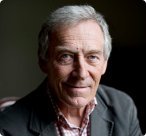 A journalist of fifty years standing offers a personal and independent assessment of the often troubled relationship between public figures and the British news media.
 Rather overlooked in Trevor Kavanagh’s anguished protest over the way the Metropolitan Police treated Sun journalists like members of “an organised crime gang” was his frank, but perhaps inadvertent, admission that paying cash for stories had become a way of life for the editorial executives of the Murdoch press.
 The actor Hugh Grant – dubbed the “Poster Boy” of the Hacked Off campaign by Paul Dacre, editor of the Daily Mail – is confident the most important work of the Leveson Inquiry has yet to come. He considers that an investigation into possible corruption between press and police and the extent of collusion between media proprietors and politicians is of far greater significance than the hacking of celebrities’ phones.
 After fifty years as a reporter and then broadcasters there is no doubt in my mind as to who were my two most intransigent interviewees: the Reverend Ian Paisley and Arthur Scargill.
  There was little comfort for Lord Justice Leveson and the prospects for his inquiry into media ethics at the launch of a new book The Phone Hacking Scandal: Journalism on Trial. A panel of journalists and former editors thought the judge was probably misguided in believing that he could provide lasting solutions.
 The role of newspapers like the Sun in offering “implacable support” for Tony Blair’s backing of the American-led invasion of Iraq was cited at the Leveson Inquiry as an example of how the Murdoch press was required to reflect the political views of its proprietor.