A journalist of fifty years standing offers a personal and independent assessment of the often troubled relationship between public figures and the British news media.
My aim is to try to monitor events and issues affecting the ethics of journalism and the latest developments in the rapidly-changing world of press, television, radio and the Internet.
Expect too an insight into the black arts of media manipulation. So spin-doctors, Beware!
Blanket coverage of the withdrawal of Fred Goodwin’s knighthood was another graphic illustration of the dominant position of financial news in today’s 24/7 media environment. But for once there was – at least to begin with – a level playing field.
By using a government website to make the declaration that the Honours Forfeiture Committee had made its decision, Downing Street circumvented the anonymous briefings which drive so much of the financial news agenda.
A statement was posted on the Cabinet Office’s website at 5pm (31.1.2012) stating that it would be announced in the London Gazette that the knighthood conferred on Goodwin had been “cancelled and annulled”. The scale and severity of his actions as chief executive of the Royal Bank of Scotland made it an exceptional case; he had brought the “honours system into disrepute.”
Headlines on the front pages of next day’s national newspapers denounced Goodwin in the lurid terms which have dogged him for the last four years – a level of abuse which has placed “Fred the Shred” on a par with the former mineworkers’ president Arthur Scargill who was turned into a similar hate figure thirty years ago.
From the very moment Goodwin was forced to resign in 2008 after RBS had to be bailed out by the taxpayer, he was subjected to a sustained campaign of press abuse, the kind of blanket character assassination not seen since the 1980s when the trade union leaders who stood out against Margaret Thatcher had their reputations trashed by the tabloids.
Ofcom, the broadcasting regulator, gave an assurance to the Leveson Inquiry (1.2.2012) that it would speed up its investigation into whether it has sufficient power to provide protection against media companies exercising too much political influence.
Ed Richards, Ofcom’s chief executive, told Lord Justice Leveson that if given another chance to look again at News Corporation’s aborted bid for total control of BSkyB it would have placed more emphasis on the “risk to the democratic process.”
Ofcom’s evidence gets to the heart of one of the key challenges for the Inquiry: should there be fresh restrictions on the concentration of media power? Campaigners for greater media plurality say that News Corporation’s level of media ownership in Britain – 39 per cent of BSkyB together with three national newspapers (The Times, SundayTimes and Sun) – is too large and should be reduced.
In his evidence to the inquiry Richards acknowledged that the absence of the power to make recommendations on the impact of media concentration on the democratic process became an issue during the investigations it conducted into News Corporation’s bid to take full control of BSkyB.
Mark Thompson, the BBC’s director general, spent two and a half hours in front of the Leveson Inquiry on media ethics but to my great disappointment he did not offer an opinion on the government’s six-year freeze of the licence fee, by far the greatest restraint on the quality and quantity of BBC journalism.
There could hardly have been a clearer example of the chilling effect of government interference and the threat to the plurality of the British news media – two of the key issues which Lord Justice Leveson has been asked to investigate.
When invited to comment on his relationship with politicians, Thompson insisted that he always tried to keep them at arm’s length. But throughout his oral evidence (23.1.2012) he did not address the impact of the hurried and largely secret negotiations which he had to conduct on the BBC’s behalf in October 2010 when the Conservative-Liberal Democrat coalition government froze the licence fee for six years and effectively reduced the BBC’s spending power by 20 per cent.
Instead of exploiting the platform he had been given and dealing head on with the repercussions of the biggest setback to BBC’s independence and vitality for a generation, the director general retreated to the safer ground of his role as the Corporation’s editor in chief.
Without actually naming names, the BBC Trust chairman Lord Patten has condemned recent Prime Ministers for having kidded themselves that Rupert Murdoch’s newspapers determined the outcome of general elections. When giving evidence to the Leveson Inquiry (23.1.2012), he condemned the “unseemly” behaviour of both Premiers and Opposition leaders in getting too close to Rupert and James Murdoch and their executives.
But Lord Patten did get personal when welcoming David Cameron’s decision to instruct ministers to publish a record of all their future meetings with media proprietors. He acknowledged that since becoming chairman of the BBC Trust in May last year, he would probably have met Cameron more than once if he had been a “News International executive”. Personally he saw no need to have “sleepovers” – a back handed swipe at Rebekah Brooks’ visit to Chequers, the Prime Minister’s country residence.
One of Lord Justice Leveson’s roles is to examine the future relationship between media proprietors and politicians as it affects media plurality and regulation and Lord Patten left the judge in no doubt that the level of contact had been “demeaning” and that there was at least a perception of collusion.
But although Lord Patten rebuked Cameron for his conduct in relation to News International and its executives, he did not address – nor was he asked to – the impact of the coalition government’s decision in October 2010 to impose a six-year freeze on the BBC’s licence fee.
Cameron’s promise, as Opposition leader, in 2008 to rein in “the bloated BBC” ( in a signed article in the Sun) and freeze the licence fee was welcomed at the time by the News International titles; Cameron's attacks on the BBC were seen as an important cog in reconnecting him to the political and commercial agenda of the Murdoch press which backed the Conservatives in the 2010 general election.
Without the ability to use the Freedom of Information Act to probe the Metropolitan Police and the Crown Prosecution Service, the Labour MP Tom Watson doubts whether a House of Commons select committee would have made the progress it did in exposing the cover-up over the phone hacking scandal at the News of the World.
He fears that the Conservative-Liberal Democrat coalition government is trying to find ways to restrict the scope of the Act – a move recommended by the former Cabinet Secretary Sir Gus O’Donnell, and a view echoed by the former Labour Prime Minister Tony Blair.
By using repeated Freedom of Information requests the Culture, Media and Sport Select Committee forced the Metropolitan Police and the Director of Public Prosecutions to reveal the contents of their hospitality registers which contained details of social engagements with News International executives.
By using the Act, the committee gained the disclosure of information which otherwise would “still be hidden” and which was far more revealing than could have been obtained by parliamentary questions to ministers.

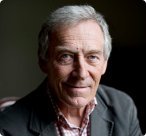 A journalist of fifty years standing offers a personal and independent assessment of the often troubled relationship between public figures and the British news media.
 Blanket coverage of the withdrawal of Fred Goodwin’s knighthood was another graphic illustration of the dominant position of financial news in today’s 24/7 media environment. But for once there was – at least to begin with – a level playing field.
 Ofcom, the broadcasting regulator, gave an assurance to the Leveson Inquiry (1.2.2012) that it would speed up its investigation into whether it has sufficient power to provide protection against media companies exercising too much political influence.
 Mark Thompson, the BBC’s director general, spent two and a half hours in front of the Leveson Inquiry on media ethics but to my great disappointment he did not offer an opinion on the government’s six-year freeze of the licence fee, by far the greatest restraint on the quality and quantity of BBC journalism.
 Without actually naming names, the BBC Trust chairman Lord Patten has condemned recent Prime Ministers for having kidded themselves that Rupert Murdoch’s newspapers determined the outcome of general elections. When giving evidence to the Leveson Inquiry (23.1.2012), he condemned the “unseemly” behaviour of both Premiers and Opposition leaders in getting too close to Rupert and James Murdoch and their executives.
 Without the ability to use the Freedom of Information Act to probe the Metropolitan Police and the Crown Prosecution Service, the Labour MP Tom Watson doubts whether a House of Commons select committee would have made the progress it did in exposing the cover-up over the phone hacking scandal at the News of the World.